
When a hot water system dies, most people replace it with whatever was there before. Often that’s the right call, but not always. If yours is on the way out, or you’d rather choose the next one before it fails, here’s how the main types compare for a Perth home. I install all of them, so I’ve got no reason to push one over another.
The quick version
If you’ve already got mains gas and you’re happy with it, a like-for-like gas replacement is the simplest and usually the quickest job. If you’re on electric, or you want lower running costs over the long run, a heat pump is worth a serious look, and Perth’s mild climate suits them. Solar makes sense if you’ve got a good north-facing roof and you’re staying put for a while. Plain electric storage is the cheapest to buy but the dearest to run.
| Type | Upfront cost | Running cost | Worth knowing |
|---|---|---|---|
| Gas storage | Moderate | Moderate | Needs mains gas. A like-for-like swap is usually quick. |
| Gas continuous flow | Moderate | Moderate | Never runs out. May need a bigger gas supply. |
| Electric storage | Lowest | Highest | Cheaper to run on an off-peak tariff. |
| Heat pump | Higher | Low | Uses around 30% of the energy of a standard electric system. Needs outdoor space. |
| Solar | Higher | Low | Needs a suitable roof. Has a gas or electric booster. |
Running costs are relative to each other, and the heat pump figure is from the federal government’s YourHome guide. The actual price depends on your house and what the install involves.
Gas hot water: storage or continuous flow
A gas storage system heats a tank of water and keeps it hot. It recovers quickly, handles a busy morning well, and a like-for-like swap is usually done in a day.
A continuous flow system (sometimes called instantaneous) only heats water as you use it, so it never runs out and there’s no tank losing heat overnight. The catch is that it needs enough gas supply to fire up at full rate. In some houses that means upgrading the gas line or the meter, and I’ll check that before I quote.
Any gas hot water work has to be done by a licensed gas fitter. When I finish, I lodge a notice of completion, and WA’s gas eNotice system emails you a copy if you give me your email address. My gas fitting licence is GF17376.
Electric storage
An electric storage system heats a tank with an element, much like a big kettle. It’s the cheapest unit to buy and the simplest to install, which is why so many older Perth homes have one. The trade-off is running cost: heating water with a straight element uses a lot of electricity. If you’re on a tariff with cheaper off-peak hours, running it through those hours helps.
Heat pump
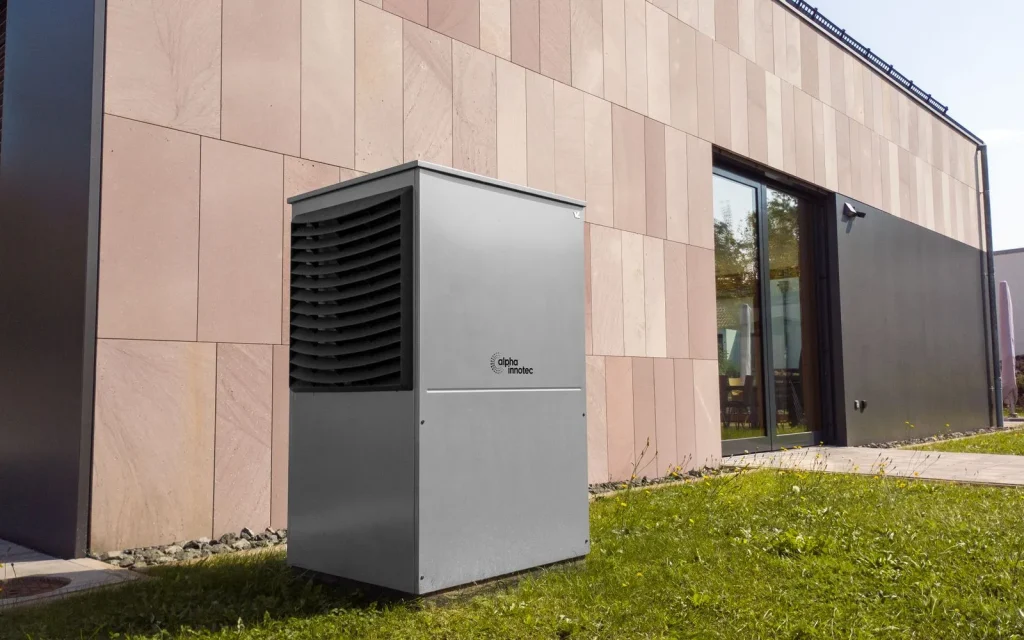
A heat pump works like a reverse-cycle air conditioner. Instead of heating water directly with an element, it pulls heat out of the surrounding air and moves it into the tank, so it uses around 30% of the energy of a conventional electric system, according to the federal government’s YourHome guide. Perth’s weather is kind to them, because they work best when the air isn’t freezing.
Things to know before you choose one:
- They cost more up front than gas or electric storage.
- Heat pumps can qualify for small-scale technology certificates under the federal Small-scale Renewable Energy Scheme, which usually comes off the price you pay.
- The unit has a compressor that makes a hum like an air conditioner’s outdoor unit, so it’s worth siting it away from bedroom windows, yours and the neighbours’.
- It needs a spot outside with some air around it.
Solar
Solar hot water uses collectors on the roof to heat the water, with a gas or electric booster for cloudy stretches. Perth gets plenty of sun, so a well-placed system does most of the work for most of the year. It needs a suitable roof, and the install is a bigger job than a straight swap, so it suits people planning to stay in the house.
What switching types involves
Changing from one type to another is more than a swap, and it’s worth knowing that before you’re standing in a cold shower.
- Going from gas to a heat pump means the gas line to the old unit gets capped off safely, and the heat pump may need its own electrical circuit, which is an electrician’s job.
- Going from electric to gas needs a gas line run to the new unit’s position, and a continuous flow system may need a bigger gas supply.
- Either way it takes longer than a like-for-like changeover, so if your current system is still working, planning the switch now saves you making the decision in a hurry.
Repair or replace?
Not every failure means a new system. A thermostat, element, valve or gas control can often be replaced and give you more years out of the one you’ve got. If a repair makes more sense than a new unit, I’ll say so. I’d rather you ring me back in ten years than feel sold to now.
Signs it’s time to start thinking about a replacement:
- Rusty or discoloured water from the hot tap
- Water pooling around the base of the tank
- Hot water that runs out much faster than it used to
- A pilot light that won’t stay lit, or a unit that keeps needing repairs
Common questions
How long does a hot water system last?
It varies with the type, the water and how it’s been looked after. Storage tanks usually fail from corrosion inside the tank. They have a sacrificial anode that corrodes first to protect the tank, and replacing it before it’s used up helps the tank last longer.
Can you replace my hot water system the same day?
A straight swap for the same type usually is, and I take the old unit away with me. Switching to a different type can take longer, depending on what needs to change.
How much does a new system cost?
It depends on the type, the size your household needs and what the install involves. Once I know what you’ve got and what you want, you get a fixed price in writing before I start, and that’s what you pay.
If you’re weighing up options, or your current system has just given up, here’s how I handle hot water jobs, or send me the details for a quote. For anything gas, see gas fitting.